GASTROENTEROLOGÍA | ESTREÑIMIENTO FUNCIONAL EN NIÑOS
Sinbiótico eficaz para aliviar el estreñimiento funcional infantil
El uso de las cepas contenidas en Multiflora ha demostrado mejorar la frecuencia y consistencia de las evacuaciones en niños con estreñimiento funcional, reduciendo el malestar.7
Multiflora contiene cepas específicas que ayudan a fortalecer la microbiota, clave en la regulación del tránsito digestivo.7
Multiflora es una opción:
Segura
Bien tolerada
Respaldada por evidencia clínica
Acompaña el tratamiento del estreñimiento funcional en pediatría y contribuye a mejorar la calidad de vida de los niños.7
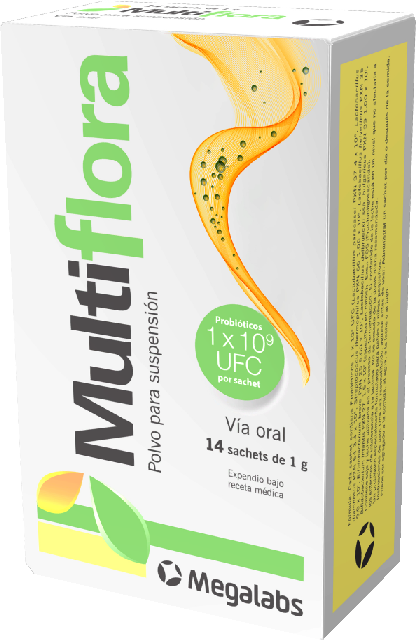
Multiflora
Apoyo sinbiótico en el tratamiento del estreñimiento funcional infantil.
El estreñimiento funcional en niños es una condición frecuente que puede afectar su bienestar y calidad de vida. Multiflora ofrece un apoyo clave al actuar sobre una de las causas subyacentes: el desequilibrio de la microbiota intestinal.
Multiflora es un sinbiótico seguro y bien tolerado que favorece el tránsito intestinal y mejora la frecuencia y consistencia de las evacuaciones, contribuyendo a reducir el malestar digestivo en la población pediátrica.1
Evidencia clinica:
The effect of probiotics on childhood constipation: a randomized controlled double blind clinical trial
Multiflora es una estrategia efectiva y segura que mejora el tránsito intestinal, alivia los síntomas y promueve el equilibrio de la microbiota desde la infancia.7
Sociedad Española de Farmacia Clínica, Familiar y Comunitaria (SEFAC), Sociedad Española de Probióticos y Prebióticos (SEPyP). Guía de actuación y documento de consenso sobre el manejo de preparados con probióticos y/o prebióticos en la farmacia comunitaria. SEFAC; 2018.
Ianiro G, Rizzatti G, Plomer M, et al. Bacillus clausii for the Treatment of Acute Diarrhea in Children: A Systematic Review and Meta-Analysis of Randomized Controlled Trials. Nutrients. 2018;10(8):1074. doi:10.3390/nu10081074
Ahmad K, Fatemeh F, Mehri N, Maryam S. Probiotics for the treatment of pediatric helicobacter pylori infection: a randomized double-blind clinical trial. Iran J Pediatr. 2013;23(1):79-84.
Ishaque SM, Khosruzzaman SM, Ahmed DS, Sah MP. A randomized placebo-controlled clinical trial of a multi-strain probiotic formulation (Bio-Kult®) in the management of diarrhea-predominant irritable bowel syndrome. BMC Gastroenterol. 2018;18(1):71. doi:10.1186/s12876-018-0788-9
Dong M, Wu Y, Zhang M, Chen P, Zhang Z, Wang S. Effect of probiotics intake on constipation in children: an umbrella review. Front Nutr. 2023;10:1218909. doi:10.3389/fnut.2023.1218909
Del Piano M, Carmagnola S, Anderloni A, et al. The use of probiotics in healthy volunteers with evacuation disorders and hard stools: a double-blind, randomized, placebo-controlled study. J Clin Gastroenterol. 2010;44 Suppl 1:S30-4. doi:10.1097/MCG.0b013e3181ee31c3
Sadeghzadeh M, Rabieefar A, Khoshnevisasl P, Mousavinasab N, Eftekhari K. The effect of probiotics on childhood constipation: a randomized controlled double blind clinical trial. Int J Pediatr. 2014;2014:937212. doi:10.1155/2014/937212
Fateh R, Iravani S, Frootan M, Rasouli MR, Saadat S. Synbiotic preparation in men suffering from functional constipation: a randomised controlled trial. Swiss Med Wkly. 2011;141:w13239. doi:10.4414/smw.2011.13239
Eslamparast T, Zamani F, Hekmatdoost A, et al. Effects of synbiotic supplementation on insulin resistance in subjects with the metabolic syndrome: a randomised, double-blind, placebo-controlled pilot study. Br J Nutr. 2014;112(3):438-45. doi:10.1017/S0007114514000919
Vivekananda MR, Vasthavi C, Harsha MB, Shivaparasad D, Ravindra S. To assess the efficacy of Bacillus clausii UBB-07 2 Billion spores on gingivitis: A randomized control trial. Int J Oral Health Sci. 2020;10(1):32-35. doi:10.4103/ijohs.ijohs_12_19
Yala ET. The Clinical Efficacy of Multi-strain Probiotics (Protexin) in the Management of Acute Gastroenteritis in Children Two Months to Two Years Old. PIDSP. 2010;11(2):86-91.
Kianifar H, Ahanchian H, Grover Z, et al. Synbiotic in the management of infantile colic: a randomised controlled trial. J Paediatr Child Health. 2014;50(10):801-805. doi:10.1111/jpc.12640
Farid R, Ahanchian H, Jabbari F, Moghiman T. Effect of a new synbiotic mixture on atopic dermatitis in children: a randomized-controlled trial. Iran J Pediatr. 2011;21(2):225-30.
Wang Y, Gao L, Zhang YH, Shi CS, Ren CM. Efficacy of probiotic therapy in full-term infants with critical illness. Asia Pac J Clin Nutr. 2014;23(4):575-80. doi:10.6133/apjcn.2014.23.4.14
Marseglia GL, Tosca M, Cirillo I, et al. Efficacy of Bacillus clausii spores in the prevention of recurrent respiratory infections in children: a pilot study. Ther Clin Risk Manag. 2007;3(1):13-7. doi:10.2147/tcrm.2007.3.1.13
Eslamparast T, Poustchi H, Zamani F, Sharafkhah M, Malekzadeh R, Hekmatdoost A. Synbiotic supplementation in nonalcoholic fatty liver disease: a randomized, double-blind, placebo-controlled pilot study. Am J Clin Nutr. 2014;99(3):535-42. doi:10.3945/ajcn.113.068890
Shavakhi A, Minakari M, Firouzian H, Assali R, Hekmatdoost A, Ferns G. Effect of a Probiotic and Metformin on Liver Aminotransferases in Non-alcoholic Steatohepatitis: A Double Blind Randomized Clinical Trial. Int J Prev Med. 2013;4(5):531-537.
Tafazzoli HH, Amiraliakbari S, Afrakhteh M, et al. Comparison of Metronidazole versus a Combination of Metronidazole plus Probiotics in the Treatment of Bacterial Vaginosis. J Womens Health Issues Care. 2014;3(3):1-5. doi:10.4172/2325-9795.1000146
Pérez-Cobas AE, Gosalbes MJ, Friedrichs A, et al. Gut microbiota disturbance during antibiotic therapy: a multi-omic approach. Gut. 2013;62(11):1591-1601. doi:10.1136/gutjnl-2012-303184
Murina F, Graziottin A, Vicariotto F, De Seta F. Can Lactobacillus fermentum LF10 and Lactobacillus acidophilus LA02 in a Slow-release Vaginal Product be Useful for Prevention of Recurrent Vulvovaginal Candidiasis? A Clinical Study. Journal of Clinical Gastroenterology. 2014;48:S102-S105.
Mogna L, Del Piano M, Deidda F, Nicola S, Soattini L, Debiaggi R, Sforza F, Strozzi G, Mogna G. Assessment of the in vitro Inhibitory Activity of Specific Probiotic Bacteria Against Different Escherichia coli Strains. Journal of Clinical Gastroenterology. 2012;46:S29-S32.
Vicariotto F. Effectiveness of an Association of a Cranberry Dry Extract, D-mannose, and the Two Microorganisms Lactobacillus plantarum LP01 and Lactobacillus paracasei LPC09 in Women Affected by Cystitis: A Pilot Study. Journal of Clinical Gastroenterology. 2014;48:S96-S101.
Vicariotto F, Mogna L, Del Piano M. Effectiveness of the Two Microorganisms Lactobacillus fermentum LF15 and Lactobacillus plantarum LP01, Formulated in Slow-Release Vaginal Tablets, in Women Affected by Bacterial Vaginosis: A Pilot Study. Journal of Clinical Gastroenterology. 2014;48:S106-S112.
Vladareanu R, Mihu D, Mitran M, Mehedintu C, Boiangiu A, Manolache M, Vladareanu S. New evidence on oral L. plantarum P17630 product in women with history of recurrent vulvovaginal candidiasis (RVVC): a randomized double-blind placebo-controlled study. European Review for Medical and Pharmacological Sciences. 2018;22:262-267.
Murina F, Graziottin A, Vicariotto F, De Seta F. Can Lactobacillus fermentum LF10 and Lactobacillus acidophilus LA02 in a Slow-release Vaginal Product be Useful for Prevention of Recurrent Vulvovaginal Candidiasis? A Clinical Study. Journal of Clinical Gastroenterology. 2014;48:S102-S105.
Vicariotto F, Del Piano M, Mogna L, Mogna G. Effectiveness of the Association of 2 Probiotic Strains Formulated in a Slow Release Vaginal Product, in Women Affected by Vulvovaginal Candidiasis. A Pilot Study. Journal of Clinical Gastroenterology. 2012;46:S73-S80.
Mogna L, Del Piano M, Deidda F, Nicola S, Soattini L, Debiaggi R, Sforza F, Strozzi G, Mogna G. Assessment of the in vitro Inhibitory Activity of Specific Probiotic Bacteria Against Different Escherichia coli Strains. Journal of Clinical Gastroenterology. 2012;46:S29-S32.
Vicariotto F. Effectiveness of an Association of a Cranberry Dry Extract, D-mannose, and the Two Microorganisms Lactobacillus plantarum LP01 and Lactobacillus paracasei LPC09 in Women Affected by Cystitis: A Pilot Study. Journal of Clinical Gastroenterology. 2014;48:S96-S101.
Vicariotto F, Mogna L, Del Piano M. Effectiveness of the Two Microorganisms Lactobacillus fermentum LF15 and Lactobacillus plantarum LP01, Formulated in Slow-Release Vaginal Tablets, in Women Affected by Bacterial Vaginosis: A Pilot Study. Journal of Clinical Gastroenterology. 2014;48:S106-S112.
Silverman J, Schreiber H, Hooton TM, Hultgren SJ. From Physiology to Pharmacy: Developments in the Pathogenesis and Treatment of Recurrent Urinary Tract Infections. Current Urology Reports. 2013;14:448-456.
Andreu A, Pigrau C, eds. Patogenia de las infecciones del tracto urinario. Enferm Infecc Microbiol Clin. 2005;23(4):3-8.
Flores-Mireles AL, Walker JN, Caparon M, Hultgren SJ. Urinary tract infections: epidemiology, mechanisms of infection and treatment options. Nature Reviews Microbiology. 2015;13:269-284.
Vicariotto F. Effectiveness of an Association of a Cranberry Dry Extract, D-mannose, and the Two Microorganisms Lactobacillus plantarum LP01 and Lactobacillus paracasei LPC09 in Women Affected by Cystitis: A Pilot Study. Journal of Clinical Gastroenterology. 2014;48:S96-S101.
Mogna L, Del Piano M, Deidda F, Nicola S, Soattini L, Debiaggi R, Sforza F, Strozzi G, Mogna G. Assessment of the in vitro Inhibitory Activity of Specific Probiotic Bacteria Against Different Escherichia coli Strains. Journal of Clinical Gastroenterology. 2012;46:S29-S32.
Mogna L, Pane M, Nicola S, Raiteri E. Screening of Different Probiotic Strains for Their In Vitro Ability to Metabolise Oxalates Any Prospective Use in Humans. Journal of Clinical Gastroenterology. 2014;48 Suppl 1:S91-S95.
Wawrysiuk S, Naber K, Rechberger T, Miotla P. Prevention and treatment of uncomplicated lower urinary tract infections in the era of increasing antimicrobial resistance—non-antibiotic approaches: a systematic review. Archives of Gynecology and Obstetrics. 2019;300:821-828.
Przybylek I, Karpinski TM. Antibacterial Properties of Propolis. Molecules. 2019;24:2047.
Monografía Ucramil. Megalabs.
Ahumada R, et al. Infecciones del tracto urinario en México, un problema de salud pública. Revista Tendencias en Docencia e Investigación en Química. 2022;8(8):728-734.
Krupskaya D, et al. Infección del tracto urinario y manejo antibiótico en Latinoamérica. Revista Científica Arbitrada Multidisciplinaria PENTACIENCIAS. 2023;5(3):329-342.
Quevedo G, et al. Prevalencia de infecciones del tracto urinario y factores de riesgo en adultos de Latinoamérica. FIPCAEC. 2022;7(4):1382-1400.
Koradia P, et al. Probiotic and cranberry supplementation for preventing recurrent uncomplicated urinary tract infections in premenopausal women: a controlled pilot study. Expert Review of Anti-infective Therapy. 2019;17:733-740.
Ucramil (probióticos, arándanos y vitamina A). Cápsulas. Ficha técnica. Megalabs.
Vaginal Health Menoguide. Asociación Española para el Estudio de la Menopausia. 2014.
Martín R, et al. The vaginal microbiota: protective role, associated diseases and treatment perspectives. Enferm Infecc Microbiol Clin. 2008;26(3):160-167.
Consensus on vaginal probiotics. Asociación Española para el Estudio de la Menopausia. 2012.
Vitali B, et al. Dynamics of vaginal bacterial communities in women developing bacterial vaginosis, candidiasis or no infection analysed by PCR-denaturing gradient gel electrophoresis and real-time PCR. Appl Environ Microbiol. 2007;73(18):5731-5741.
Zhou X, et al. Characterization of vaginal microbial communities in adult healthy women using cultivation-independent methods. Microbiology. 2004;150(8):2565-2573.
Reid G, Bruce AW. Urogenital infections in women: can probiotics help? Postgrad Med J. 2003;79(934):428-432.
Valore EV, Wiley DJ, Ganz T. Reversible deficiency of antimicrobial polypeptides in bacterial vaginosis. Infect Immun. 2006;74(10):5693-5702.
Donders G. Definition and classification of abnormal vaginal flora. Best Pract Res Clin Obstet Gynaecol. 2007;21(3):355-373.
Thies FL, Konig W, Konig B. Rapid characterization of the normal and disturbed vaginal microbiota by application of 16S rRNA gene terminal RFLP fingerprinting. J Med Microbiol. 2007;56(6):755-761.
Data on file.
Palacios S, et al. Is it possible to prevent recurrent vulvovaginitis? The role of Lactobacillus plantarum I1001 (CECT7504). Eur J Clin Microbiol Infect Dis. 2016;35(10):1701-1708.
Nuriel-Ohayon M, et al. Microbial Changes during Pregnancy, Birth, and Infancy. Front Microbiol. 2016;7:1031.
Moreno Villares JM, et al. The first 1000 days: an opportunity to reduce the burden of noncommunicable diseases. Nutr Hosp. 2019;36(1):218-232.
Robertson RC, et al. The Human Microbiome and Child Growth – First 1000 Days and Beyond. Trends Microbiol. 2019;27(2):131-147.
Walker WA. The importance of appropriate initial bacterial colonization of the intestine in newborn, child, and adult health. Pediatr Res. 2017;82(3):387-395.
Giniwa M. Prospecto, información para el usuario.
Shadid R, et al. Effects of galactooligosaccharide and long-chain fructooligosaccharide supplementation during pregnancy on maternal and neonatal microbiota and immunity–a randomized, double-blind, placebo-controlled study. Am J Clin Nutr. 2007;86(5):1426-1437.
Boggio Marzet C, et al. Approach to probiotics in pediatrics: the role of Lactobacillus rhamnosus GG. Arch Argent Pediatr. 2022;120(1):e1-e7.
Voigt J, et al. Lactobacillus rhamnosus Used in the Perinatal Period for the Prevention of Atopic Dermatitis in Infants: A Systematic Review and Meta-Analysis of Randomized Trials. Am J Clin Dermatol. 2022;23(6):801-811.
Dronkers TMG, et al. Global analysis of clinical trials with probiotics. Heliyon. 2020;6(7):e04467.
Kalliomäki M, et al. Probiotics in primary prevention of atopic disease: a randomised placebo-controlled trial. Lancet. 2001;357(9262):1076-1079.
Rautava S, et al. Probiotics during pregnancy and breast-feeding might confer immunomodulatory protection against atopic disease in the infant. J Allergy Clin Immunol. 2002;109(1):119-121.
Nicola S, et al. Interaction between probiotics and human immune cells: the prospective anti-inflammatory activity of Bifidobacterium breve BR03. AgroFOOD. 2010;21(2):44-47.
Mogna L, et al. Capability of the two microorganisms Bifidobacterium breve B632 and Bifidobacterium breve BR03 to colonize the intestinal microbiota of children. J Clin Gastroenterol. 2014;48 Suppl 1:S37-S39.
Kunz C, et al. Oligosaccharides in human milk: structural, functional, and metabolic aspects. Annu Rev Nutr. 2000;20:699-722.
Mei Z, et al. Biological activity of galacto-oligosaccharides: A review. Front Microbiol. 2022;13:993052.
Corzo N, et al. Prebiotics: concept, properties and beneficial effects. Nutr Hosp. 2015;31 Suppl 1:99-118.
Scientific Opinion on the substantiation of health claims related to vitamin C. European Food Safety Authority, Panel on Dietetic Products, Nutrition and Allergies (NDA). EFSA Journal. 2009;7(9):1226; 2010;8(10):1815.
Schmidt F, Gouveia VLC. Prevalence of Constipation in the General Adult Population: An Integrative Review. Journal of Wound Ostomy Continence Nursing. 2014;41:70.
Nordqvist C. Laxatives for constipation: All you need to know. Medical News Today, MediLexicon, Intl. 2017.
Dimidi E, Christodoulides S, Scott SM, Whelan K. Mechanisms of Action of Probiotics and the Gastrointestinal Microbiota on Gut Motility and Constipation. Advances in Nutrition. 2017;8:484.
Del Piano M, Carmagnola S, Anderloni A, Andorno S, Ballarè M, Balzarini M, Montino F, Orsello M, Pagliarulo M, Sartori M, Tari R, Sforza F, Capurso L. The Use of Probiotics in Healthy Volunteers With Evacuation Disorders and Hard Stools: A Double-blind, Randomized, Placebo-controlled Study. Journal of Clinical Gastroenterology. 2010;44(Suppl 1):S301.
Del Piano M, Montino F, Carmagnola S, Anderloni A, Orsello M, Garello E, Sforza F, Ballare M. The use of probiotics in the treatment of constipation in the elderly. CIBUS. 2005;1:23.
Scientific Opinion on the substantiation of health claims related to rye fibre and changes in bowel function (ID 825), reduction of post-prandial glycaemic responses (ID 826) and maintenance of normal blood LDL-cholesterol concentrations (ID 827) pursuant to Article 13(1) of Regulation (EC) No 1924/2006. EFSA Journal. 2011;9:2258.
Abellán MS, Barnuevo MD, Contreras CJ, Luque AJ, Sánchez F, Aldeguer M, García C, López FJ. Digestion-resistant maltodextrin effects on colonic transit time and stool weight: a randomized controlled clinical study. European Journal of Nutrition. 2016;55:2389.
Ayuda visual Multiflora Transit
Pourmirzaiee MA, Famouri F, Moazeni W, Hassanzadeh A, Hajihashemi M. The efficacy of the prenatal administration of Lactobacillus reuteri LR92 DSM 26866 on the prevention of infantile colic: a randomized control trial. Eur J Pediatr. 2020 Oct;179(10):1619-1626. doi: 10.1007/s00431-020-03641-4. Epub 2020 May 5. PMID: 32372186.